US Blockades Iranian Ports in Strait of Hormuz: Oil Prices Spike Higher – Bitcoin News

Key Takeaways:
- The U.S. Navy began enforcing a blockade of Iranian ports on April 13, 2026, targeting Tehran’s roughly 2 million barrels per day in oil exports.
- WTI crude climbed above $94 per barrel following CENTCOM’s announcement, while the Dow Jones dropped 246.90 points on escalation fears.
- CENTCOM says the blockade will remain in force until Iran returns to negotiations, with no fixed end date announced.
Iran Naval Blockade 2026: U.S. Cuts off Tehran Oil Exports
U.S. Central Command issued the order in accordance with a presidential directive following the collapse of peace talks in Islamabad, Pakistan. CENTCOM stated plainly that the blockade applies to vessels of all nations calling on Iranian ports along the Arabian Gulf and Gulf of Oman. Ships transiting the Strait to or from non-Iranian ports in the UAE, Saudi Arabia, or other Gulf states are free to pass.
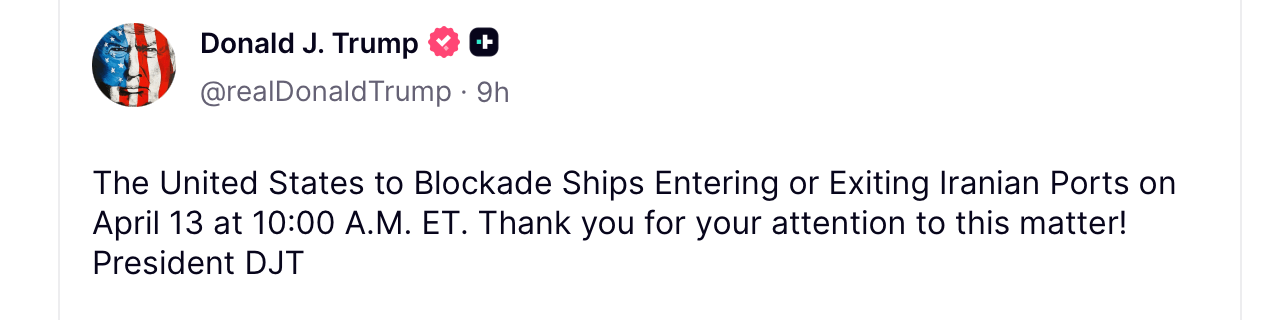
President Donald Trump announced the action on April 12 on Truth Social, saying the U.S. Navy would “immediately” begin blocking ships trying to enter or leave the Strait of Hormuz. Trump accused Iran of collecting illegal tolls on passing vessels, ordered mine-clearing operations, and warned that any Iranian forces firing on U.S. ships or commercial traffic would be “BLOWN TO HELL.”
Trump reiterated his warning ahead of the 10 a.m. ET deadline on Monday.
CENTCOM’s language was more measured. The command said additional notices to commercial mariners would be distributed before enforcement began and directed all vessels operating in the Gulf of Oman and Strait of Hormuz approaches to monitor Notice to Mariners broadcasts and contact U.S. naval forces on bridge-to-bridge channel 16.
The blockade is a direct response to Iran’s effective control of the Strait since the outbreak of the U.S.-Israel-Iran war on Feb. 28, 2026. Iran had restricted and tolled traffic through the passage, paralyzing roughly one-fifth of global oil and liquefied natural gas shipments. Washington says the blockade is designed to cut off Tehran’s remaining oil revenue lifeline, previously estimated at roughly 2 million barrels per day, while keeping the Strait open for all other commercial traffic.
Oil markets moved before the ink was dry. WTI crude climbed roughly 5% percent to above $94 a barrel. Brent crude rose approximately 6% to top $100 again. Wholesale gasoline prices also moved higher. U.S. equity markets reflected the uncertainty: the Dow Jones Industrial Average fell 246.90 points to 47,669.67, the NYSE Composite dropped 29.54 to 22,704.96, while the Nasdaq added 46.79 to hit 22,949.69, and the S&P 500 edged up 0.67 to 6,817.56.
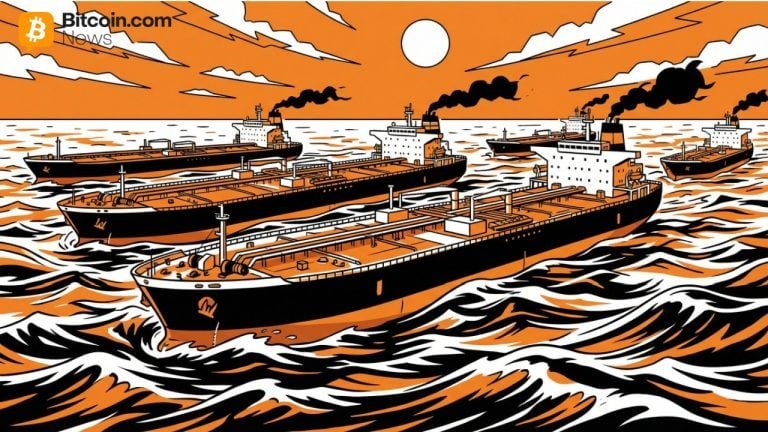
Executing the blockade is a large-scale naval operation. Analysts say it requires multiple carrier strike groups for air cover, dozens of destroyers and frigates, and support from regional allies. The Strait presents real tactical exposure to Iranian anti-ship missiles, drones, fast-attack boats, and mines, making enforcement a high-stakes proposition from day one.
Iran’s Islamic Revolutionary Guard Corps called the move an “act of piracy” and declared it illegal under international law. Iranian officials warned that “no port in the Persian Gulf or Gulf of Oman will be safe” if Iranian ports are targeted, and restated their position that the Strait is “either for everyone or for no one.” Tehran also insisted diplomacy remains the only legitimate path forward.
International reaction has been cautious. Several Gulf states and mediators, including Oman, have flagged escalation concerns. The United Kingdom has not confirmed the minesweeping role Trump attributed to it. European leaders have kept a distance from any interpretation suggesting a full Strait closure for all traffic.
The Islamabad talks collapsed primarily over Iran’s nuclear program and a set of unresolved conditions neither side was willing to move on. A fragile two-week ceasefire had been in place leading into the negotiations.
Washington has not announced a fixed end date for the blockade. Duration, U.S. officials say, depends on Iranian compliance and progress toward a broader diplomatic agreement. The legal status of the blockade also remains contested, with debate ongoing over whether belligerent rights in an armed conflict apply or whether peacetime international navigation law takes precedence.
About the Author